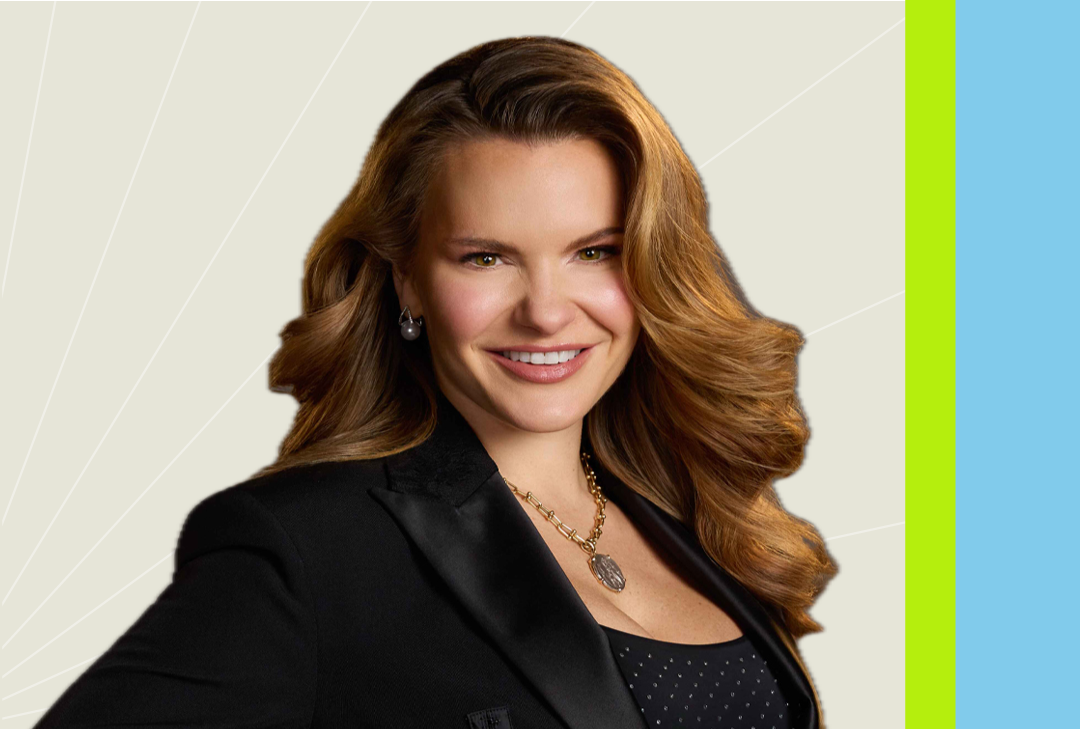
In our Shaping the Future With… series, we explore the perspectives of leaders helping shape the future of governance. In this edition, Watson Partner Rachel O’Connor speaks with Michele Romanow — engineer, serial entrepreneur, investor, and director.
Michele has spent her career building businesses at the intersection of technology, consumer behaviour, and innovation. Before her 33rd birthday, she had founded five companies, including SnapSaves, which was acquired by Groupon, and Buytopia, one of Canada’s fastest-growing companies. She is the co-founder of Clearco, the pioneer in revenue-based financing having invested over $3.3B in over 11,000 companies, a prolific angel investor, and a director for organizations including Vail Resorts, the largest global ski operator, Ashton Woods, the 10th largest homebuilder in the US, Queen’s School of Business, and Shad Canada.
Having spent much of her career helping organizations anticipate what’s next, Michele brings a perspective shaped by both sides of the boardroom table. In this conversation, she shares why good governance is about creating the conditions for clear decision-making, why boards should think in terms of guardrails rather than gates, and why the future will place an even greater premium on human judgment, experience, and adaptability.
Read on to learn why Michele believes directors should hold strong opinions loosely, why governance feels more like partnership than policing, and which big cat she identifies with in the boardroom.
Rachel O’Connor: Michele, we like to start every conversation with the same question: what is your definition of good governance?
Michele Romanow: I think it’s about clarity, accountability, courage, and ultimately, clear decision-making.
A lot of people think governance is about process. I think it’s about creating the right conditions for a company to thrive long term, and that comes down to having the right insight in the room. Did directors get the information they needed? Did we have the right debate? The right challenge? Did we bring different experiences to the discussion?
If you’ve thought through the big decisions, had meaningful debate, and reached a point where the organization can move forward with confidence, that’s good governance.
ROC: Is good governance better served by directors with a strong point of view, or directors with curiosity?
MR: I love the concept of having strong opinions, loosely held. You should come into a discussion with a point of view based on your experience and then be very willing to change and adapt that point of view based on new information.
The CEO always has 100 times more information than the board. They’re in it all day long. Having sat in the CEO seat and having sat on boards, I’ve become much more aware of how important it is to balance conviction with trust.
I also think we live in a culture where we get upset when people change their minds. To me, that’s usually a sign that you’ve received better information and are making a better decision. I think it should be applauded when people are willing to evolve their thinking – and when businesses are willing to change and adapt.
ROC: That requires a combination of confidence and humility.
MR: Completely. Humility is incredibly important. The most magical combination for me is a board of talented people with low egos. People can then hear each other and really listen.
I think when the ego gets too big, the conversation becomes about managing personalities instead of managing problems.
The most magical combination for me is a board of talented people with low egos. People can then hear each other and really listen.
ROC: You’ve had the opportunity to see governance from both sides of the table. How has being a founder and CEO shaped you as a director?
MR: One of the most powerful things in life is seeing something from both sides of the table.
Being on boards made me a better CEO because I could see how directors approached difficult situations and what kinds of questions they asked. Being a CEO made me a better director because it gave me a tremendous amount of empathy for the role.
A CEO needs to have a vision. They need to be able to say, “Here’s how I got here, here’s what I’ve considered, and here’s my recommendation.” You don’t want a CEO who says, “Whatever you guys think.” But you also don’t want a CEO who isn’t listening or isn’t drawing on the wisdom they have available from their board.
Boards bring something different. They’ve often seen more iterations of a problem; they’ve seen history repeat itself in different forms. They can zoom out, provide perspective, and connect experiences from other organizations and industries.
Done well, governance really feels like partnership – not like policing.
ROC: Boards are often asked to balance innovation and risk. How should they think about that tension?
MR: Most innovation inside a large company involves some degree of cannibalization of the current business. People love the idea that you’ll create something new without affecting the old business, but that’s almost never how it works. People stop using one thing and start using another, and those are difficult trade-offs. In addition, innovation is an extremely messy process, it’s never a straight line and it’s never as fast or as cheap as the early ideas.
Boards that want to enable innovation should focus on guardrails, not gates. They’re not trying to prevent every mistake; they’re trying to encourage the right experiments, create accountability around those experiments, and make sure the organization learns quickly.
And they have to remember that sometimes the biggest risk is not moving fast enough. There are ten founders right now, each working all day and all night trying to build something better.
Boards that want to enable innovation should focus on guardrails, not gates.
ROC: Let me ask you about AI. You’ve spoken about technology and digital transformation in boardrooms for years. What lessons does that experience hold for AI? Does every board now need an AI expert?
MR: What I’ve learned is that boards often start by saying they need one person who understands a new technology. There’s usually a period where the technology feels specialized or niche, and then suddenly it becomes fundamental to how the business operates and everyone needs to understand it. AI will be the same.
ROC: How do you think AI will change the work of the board itself?
MR: I think AI will take over a lot of the work that consumes time but doesn’t necessarily create insight, and that’s exciting.
If we can spend 85% of a board meeting talking about strategy and the hardest challenges facing the business, and less time on administrative work while still making sure it’s done properly, that’s the dream.
The other thing is that AI makes human experience even more valuable.
An LLM is based on information that’s on the internet, but most people don’t talk publicly about the 10 stickiest HR situations they’ve had to deal with. They don’t write about the times their company almost went bankrupt and what actually got them through it.
I think the perspective that comes from those deep, personal, complicated situations that directors could only know about because they’ve experienced them is going to become more and more valuable.
I think the perspective that comes from those deep, personal, complicated situations that directors could only know about because they’ve experienced them is going to become more and more valuable.
ROC: What about the other end of the experience scale? You entered boardrooms much earlier than most directors. How did that shape your experience?
MR: When you’re the youngest person in the room, you have to earn credibility through substance. That’s been true my entire career.
I started as an entrepreneur when I was 21 years old – I had to learn everything. So, I was constantly overprepared. I read every part of every document. I spent a huge amount of time researching.
And then you learn to lean into what you know and what you’re good at. For me, that was technology, digital transformation, changing consumer behaviour, and emerging markets. Being younger was a huge advantage there. Later, it was also the perspective I brought as a founder because I fundamentally saw risk and opportunity very differently.
I still invest in a lot of startups, and in people that are early in their career and at the cutting edge of what is disruptive technology. I try to stay very close to that point of view.
ROC: What advice would you give younger leaders who want to serve on boards?
MR: Start by mastering something deeply and building expertise and perspective. Become the person who can see what’s coming next in a particular area. That’s what creates value in the boardroom.
ROC: Final question. If the boardroom were a jungle, which animal would you be?
MR: A leopard. I’d be calm, strategic, and then really fast when it mattered.
Most decisions don’t need to be made in the next three hours – you can usually observe, listen, and think – but when the moment comes, you need to move.
Tech titan Michele Romanow is an engineer and serial entrepreneur who started six companies before her 35th birthday. A “Dragon” on CBC’s hit show Dragons’ Den, Michele is the Founder & Managing Partner of Athena North Ventures and the Co-founder of Canadian unicorn, Clearco (formerly Clearbanc) the world’s largest e-commerce investor, investing over $3.3B to 11,000 entrepreneurs in 13 countries. She previously co-founded SnapSaves, acquired by American tech giant Groupon, and Buytopia.ca, acquired by Emerge.
In 2015, Michele became the youngest judge on CBC’s Dragons’ Den (Canada’s Shark Tank), and has been a ‘Dragon’ for nearly a decade. A prolific investor, Michele was named Fortune’s 40 under 40, a Young Global Leader by the World Economic Forum, one of Canada’s Most Powerful Women, Canada’s Angel Investor of the Year and winner of RBC’s Women of Influence, Innovation Award.
Michele has created digital solutions for many of the world’s leading brands, including P&G, Netflix, Starbucks, and Cirque du Soleil. In the media, Michele’s work has been profiled in Wall Street Journal, Forbes, Fortune, TechCrunch, and The Globe and Mail.
Michele is a director for Vail Resorts, Ashton Woods and Queen’s School of Business. Previously she was a director for RHEI, Freshii, Whistler Blackcomb, SHAD International and League of Innovators. Michele also co-founded the Canadian Entrepreneurship Initiative non-profit with Sir Richard Branson.