
Shaping the Future With Judith Athaide

Share:

In our Shaping the Future With… series, we share the stories and perspectives of directors helping boards lead through complexity. In this edition, Watson Partner Rachel O’Connor speaks with Judith Athaide — engineer, entrepreneur, and seasoned director — about building the conditions for long-term value, what real diversity brings to governance, and why we need more “dumb” questions in the boardroom.

Also: dancers and carpenters, butterfly valves, and the questions that change the conversation.


Rachel O’Connor: Judith, thank you for doing this. We always start with the same question: how do you define good governance?

Judith Athaide: For me, it’s the confluence of people, process, policies, systems, structure, and culture. And the two most important are people and culture.

Good governance is about intentionally creating the conditions to encourage and permit good decision-making. That’s what allows us to create long-term value.

Good governance is about intentionally creating the conditions to encourage and permit good decision-making.

ROC: Let’s dig into those two most important areas. First, when it comes to people, and how you create those conditions for good decision-making, what do you look for in a well-functioning board?

JA: First, commitment. Whether the organization is for-profit or not, directors should genuinely care about the organization’s mandate and be invested in its mission.

Second, it’s not just individual skillsets that matter, it’s board composition. You need diversity of thought. And that comes down to creating space for every voice. Every board meeting is different; some directors may dominate where they are experts, and that’s fine. But the Chair and Committee Chairs have to draw out the quiet voices who also have really good ideas, but are less likely to put up their hands.

ROC: And how would you describe a healthy governance culture?

JA: A healthy governance culture is the outcome of having the right people around the table, with a common vision on what their job is. I’ve served on boards where everyone is clear on why we’re there — and others where we’re not. It’s really hard to advance together if you’re not aligned.

Culture is also about courage, respect, and a willingness to challenge and be challenged. When those things are present, the boardroom becomes a space for real dialogue. It’s about having diverse perspectives and diverse approaches, and being respectful of all.

ROC: You mentioned diversity of thought. How do you differentiate diversity of experience and diversity of thought as it relates to board effectiveness?

JA: Diversity of experience is how you get to diversity of thought. The problem is, we often use what’s easy to measure — gender, age — as proxies for diversity. But that doesn’t always tell the full story.

I once served on a board where we looked diverse, but everyone came from the energy industry. We had the same training and similar ways of thinking. When we were looking to expand the board, I pushed for someone from an adjacent industry — we brought on a telecom communications expert. And suddenly, the diversity of thought expanded and the conversation changed. That’s what you want.

Diversity of experience is how you get to diversity of thought.

ROC: If we are trying to get to diversity of thought, what do we need to consider in practice so that we go beyond what is on paper, and get the benefit of meaningfully different lived experience and thinking?

JA: If you only have one board member who is seen as bringing diversity versus the rest of the group, then it’s really hard. There’s a lot of expectation on that board member to represent the “diverse” point of view. But when you have more, everyone becomes “diverse”, and then you can have really courageous conversations.

At NB Power, we had that. Directors from different provinces, countries, and industries. Nuclear engineers, accountants, lawyers, CEOs, energy experts — and me.

I remember sitting in a Nuclear Operations Committee meeting, listening to the Chief Nuclear Officer describe a problem with a butterfly valve. My colleagues — most nuclear experts — nodded along. I wasn’t sure what it meant, so I asked: What’s the impact on operations? What will it cost to fix? How long will the facility be down.

That’s what diversity of thought looks like. Different backgrounds lead to different questions — enabled by a culture that made it safe for everyone to speak up.

Different backgrounds lead to different questions — enabled by a culture that made it safe for everyone to speak up.

ROC: Have you ever had a moment that challenged your assumptions about what diversity really looks like in a boardroom?

JA: Yes. When I was taking the ICD program, our Calgary cohort finished case studies a few minutes early. A visiting director from Vancouver pointed it out and said, “That’s because you don’t have an original idea amongst you.” Very blunt, but he was absolutely right!

We were all from the energy sector. We had shared experiences and so shared assumptions and were solving things in a similar way. It can be wonderful to have the efficiency of being aligned and like-minded — but it can also be a sign that no one is seeing the issue differently. That stuck with me.

ROC: I was curious to ask, since we both come from an engineering background: how do you think that background shapes the way you govern?

JA: Engineers are trained to approach things from first principles. We’re analytical and want to understand the issue deeply. We ask detailed questions — sometimes more than our peers expect.

That can be valuable — especially around risk, safety, or compensation design. But it can also come across as being “in the weeds,” or asking for data that doesn’t exist. We have to know when to push and when to move on.

Many engineers are introverts too. So board chairs need to be intentional about drawing those voices in.

ROC: That engineering mindset can also help broaden the lens on risk — the kind of thinking that might have made a difference in tragedies like the Challenger or Boeing crashes.

JA: Exactly. It’s about asking the uncomfortable questions. “What does the data say about cold-weather launches?”  “Have we changed pilot training?” These aren’t nitpicks — they’re critical.

At one point, Boeing didn’t have a safety committee or safety experts on the board. That’s a serious gap.

A lot of large organizations are drawn to having  iconic leaders around the table such as successful CEOs, diplomats, or ex-politicians. We need to make room for operational expertise. Directors who ask different questions, because they are able to think through connections and implications from an operational lens.

We need to make room for operational expertise. Directors who ask different questions, because they are able to think through connections and implications from an operational lens.

ROC: We like to end these conversations with something a little more personal. If you could restart your career, what would your dream job be?

JA: Professional dancer or carpenter. Both let me use my hands and body to create something beautiful and functional. And when it’s well done, it brings people joy.


A seasoned independent director, Judith Athaide currently serves on the Boards of CPP Investments and Kiwetinohk Energy Corp, where she chairs the Governance and Nominations Committee. She is also President and CEO of The Cogent Group Inc., a firm she co-founded to provide strategic advisory services to the energy and infrastructure sectors. Judith contributes to boardroom development as an instructor with the Institute of Corporate Directors (ICD).

Her past governance service includes roles on the boards of HSBC Bank Canada, NB Power, TriSummit Utilities, FortisAlberta, Computer Modelling Group, PHX Energy, Cimarron Engineering, Cognera Corporation, the Balancing Pool of Alberta, and the Advisory Board of Accenture Business Services. She has chaired a range of board committees, including audit, health and safety, governance, human capital, and compensation. Her not-for-profit leadership includes Chairing the Calgary Chapter of the ICD, serving on the Business Advisory Council at the University of Alberta, and supporting the arts through Decidedly Jazz Danceworks. She is the founder of the Athena Society, a mentorship initiative for teenage girls.

Judith’s career spans engineering, energy, infrastructure, academia, and entrepreneurship. She has worked across Canada, the U.S., and the Caribbean, including leading engineering and execution for Calgary’s Bow Building and supporting environmental operations in the Northwest Territories. She has had academic positions at Brandon University, the University of Alberta, Mount Royal University, and the University of Calgary. She was named one of Canada’s Top 100 Most Powerful Women (2016), one of Directors & Boards’ Top 20 Directors to Watch (2022), and a Canadian Corporate Top 5 Director Honouree by BMO Financial and Women Get On Board (2022).

Judith holds a B.Comm (Hons) from the University of Manitoba, an MBA and a B.Sc. in Mechanical Engineering from the University of Alberta, and director certifications from ICD-Rotman, Global Competent Boards, Emory University, and MIT Sloan. She is a strong advocate for continuous learning, mentorship, and the power of diverse experience in shaping stronger boardrooms. An immigrant to Canada who has lived in six countries, Judith brings a global perspective and a deep commitment to inclusive leadership.
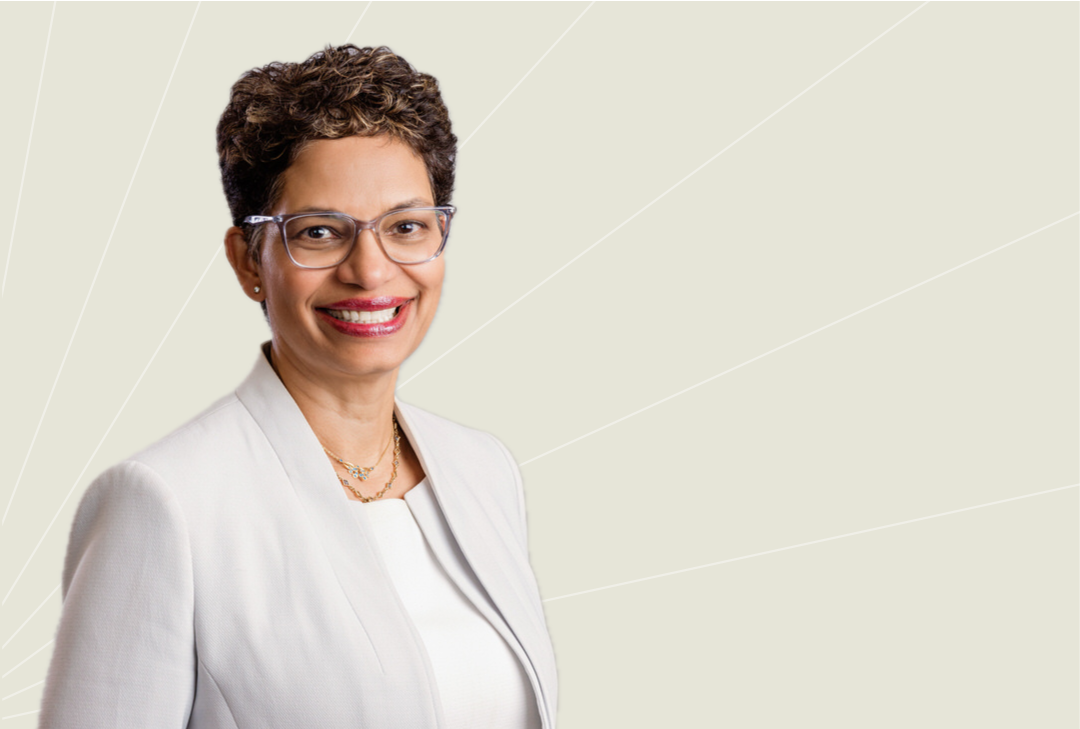

Shaping the Future With Judith Athaide

May 22, 2025 by Rachel O'Connor
Share:
Shaping the Future With Judith Athaide
Share:

In our Shaping the Future With… series, we share the stories and perspectives of directors helping boards lead through complexity. In this edition, Watson Partner Rachel O’Connor speaks with Judith Athaide — engineer, entrepreneur, and seasoned director — about building the conditions for long-term value, what real diversity brings to governance, and why we need more “dumb” questions in the boardroom.

Also: dancers and carpenters, butterfly valves, and the questions that change the conversation.


Rachel O’Connor: Judith, thank you for doing this. We always start with the same question: how do you define good governance?

Judith Athaide: For me, it’s the confluence of people, process, policies, systems, structure, and culture. And the two most important are people and culture.

Good governance is about intentionally creating the conditions to encourage and permit good decision-making. That’s what allows us to create long-term value.

Good governance is about intentionally creating the conditions to encourage and permit good decision-making.

ROC: Let’s dig into those two most important areas. First, when it comes to people, and how you create those conditions for good decision-making, what do you look for in a well-functioning board?

JA: First, commitment. Whether the organization is for-profit or not, directors should genuinely care about the organization’s mandate and be invested in its mission.

Second, it’s not just individual skillsets that matter, it’s board composition. You need diversity of thought. And that comes down to creating space for every voice. Every board meeting is different; some directors may dominate where they are experts, and that’s fine. But the Chair and Committee Chairs have to draw out the quiet voices who also have really good ideas, but are less likely to put up their hands.

ROC: And how would you describe a healthy governance culture?

JA: A healthy governance culture is the outcome of having the right people around the table, with a common vision on what their job is. I’ve served on boards where everyone is clear on why we’re there — and others where we’re not. It’s really hard to advance together if you’re not aligned.

Culture is also about courage, respect, and a willingness to challenge and be challenged. When those things are present, the boardroom becomes a space for real dialogue. It’s about having diverse perspectives and diverse approaches, and being respectful of all.

ROC: You mentioned diversity of thought. How do you differentiate diversity of experience and diversity of thought as it relates to board effectiveness?

JA: Diversity of experience is how you get to diversity of thought. The problem is, we often use what’s easy to measure — gender, age — as proxies for diversity. But that doesn’t always tell the full story.

I once served on a board where we looked diverse, but everyone came from the energy industry. We had the same training and similar ways of thinking. When we were looking to expand the board, I pushed for someone from an adjacent industry — we brought on a telecom communications expert. And suddenly, the diversity of thought expanded and the conversation changed. That’s what you want.

Diversity of experience is how you get to diversity of thought.

ROC: If we are trying to get to diversity of thought, what do we need to consider in practice so that we go beyond what is on paper, and get the benefit of meaningfully different lived experience and thinking?

JA: If you only have one board member who is seen as bringing diversity versus the rest of the group, then it’s really hard. There’s a lot of expectation on that board member to represent the “diverse” point of view. But when you have more, everyone becomes “diverse”, and then you can have really courageous conversations.

At NB Power, we had that. Directors from different provinces, countries, and industries. Nuclear engineers, accountants, lawyers, CEOs, energy experts — and me.

I remember sitting in a Nuclear Operations Committee meeting, listening to the Chief Nuclear Officer describe a problem with a butterfly valve. My colleagues — most nuclear experts — nodded along. I wasn’t sure what it meant, so I asked: What’s the impact on operations? What will it cost to fix? How long will the facility be down.

That’s what diversity of thought looks like. Different backgrounds lead to different questions — enabled by a culture that made it safe for everyone to speak up.

Different backgrounds lead to different questions — enabled by a culture that made it safe for everyone to speak up.

ROC: Have you ever had a moment that challenged your assumptions about what diversity really looks like in a boardroom?

JA: Yes. When I was taking the ICD program, our Calgary cohort finished case studies a few minutes early. A visiting director from Vancouver pointed it out and said, “That’s because you don’t have an original idea amongst you.” Very blunt, but he was absolutely right!

We were all from the energy sector. We had shared experiences and so shared assumptions and were solving things in a similar way. It can be wonderful to have the efficiency of being aligned and like-minded — but it can also be a sign that no one is seeing the issue differently. That stuck with me.

ROC: I was curious to ask, since we both come from an engineering background: how do you think that background shapes the way you govern?

JA: Engineers are trained to approach things from first principles. We’re analytical and want to understand the issue deeply. We ask detailed questions — sometimes more than our peers expect.

That can be valuable — especially around risk, safety, or compensation design. But it can also come across as being “in the weeds,” or asking for data that doesn’t exist. We have to know when to push and when to move on.

Many engineers are introverts too. So board chairs need to be intentional about drawing those voices in.

ROC: That engineering mindset can also help broaden the lens on risk — the kind of thinking that might have made a difference in tragedies like the Challenger or Boeing crashes.

JA: Exactly. It’s about asking the uncomfortable questions. “What does the data say about cold-weather launches?”  “Have we changed pilot training?” These aren’t nitpicks — they’re critical.

At one point, Boeing didn’t have a safety committee or safety experts on the board. That’s a serious gap.

A lot of large organizations are drawn to having  iconic leaders around the table such as successful CEOs, diplomats, or ex-politicians. We need to make room for operational expertise. Directors who ask different questions, because they are able to think through connections and implications from an operational lens.

We need to make room for operational expertise. Directors who ask different questions, because they are able to think through connections and implications from an operational lens.

ROC: We like to end these conversations with something a little more personal. If you could restart your career, what would your dream job be?

JA: Professional dancer or carpenter. Both let me use my hands and body to create something beautiful and functional. And when it’s well done, it brings people joy.


A seasoned independent director, Judith Athaide currently serves on the Boards of CPP Investments and Kiwetinohk Energy Corp, where she chairs the Governance and Nominations Committee. She is also President and CEO of The Cogent Group Inc., a firm she co-founded to provide strategic advisory services to the energy and infrastructure sectors. Judith contributes to boardroom development as an instructor with the Institute of Corporate Directors (ICD).

Her past governance service includes roles on the boards of HSBC Bank Canada, NB Power, TriSummit Utilities, FortisAlberta, Computer Modelling Group, PHX Energy, Cimarron Engineering, Cognera Corporation, the Balancing Pool of Alberta, and the Advisory Board of Accenture Business Services. She has chaired a range of board committees, including audit, health and safety, governance, human capital, and compensation. Her not-for-profit leadership includes Chairing the Calgary Chapter of the ICD, serving on the Business Advisory Council at the University of Alberta, and supporting the arts through Decidedly Jazz Danceworks. She is the founder of the Athena Society, a mentorship initiative for teenage girls.

Judith’s career spans engineering, energy, infrastructure, academia, and entrepreneurship. She has worked across Canada, the U.S., and the Caribbean, including leading engineering and execution for Calgary’s Bow Building and supporting environmental operations in the Northwest Territories. She has had academic positions at Brandon University, the University of Alberta, Mount Royal University, and the University of Calgary. She was named one of Canada’s Top 100 Most Powerful Women (2016), one of Directors & Boards’ Top 20 Directors to Watch (2022), and a Canadian Corporate Top 5 Director Honouree by BMO Financial and Women Get On Board (2022).

Judith holds a B.Comm (Hons) from the University of Manitoba, an MBA and a B.Sc. in Mechanical Engineering from the University of Alberta, and director certifications from ICD-Rotman, Global Competent Boards, Emory University, and MIT Sloan. She is a strong advocate for continuous learning, mentorship, and the power of diverse experience in shaping stronger boardrooms. An immigrant to Canada who has lived in six countries, Judith brings a global perspective and a deep commitment to inclusive leadership.

Related Insights

View Article
Rachel O'ConnorSep 09, 2026
Shaping the Future with Lori-Ann Beausoleil

In our Shaping the Future With… series, we explore the perspectives of directo...

View Article
Rachel O'ConnorFeb 26, 2026
Steady Hands, Stormy Seas: How Credit Union Boards Are Governing Through a Generational Turning Point

The Year Ahead for Credit Unions 2025 tested credit union resilience – and 20...

View Article
Rachel O'ConnorJan 29, 2026
Shaping the Future with JP Gladu: Bringing Generational Perspective to the Boardroom

In our Shaping the Future With… series, we explore the perspectives of directo...

Ready to boost your
Board’s performance?

Let's connect